Residential Tile Installation
Floors, backsplashes, and feature walls for South Bay homes. Measured, set, and grouted by hand.
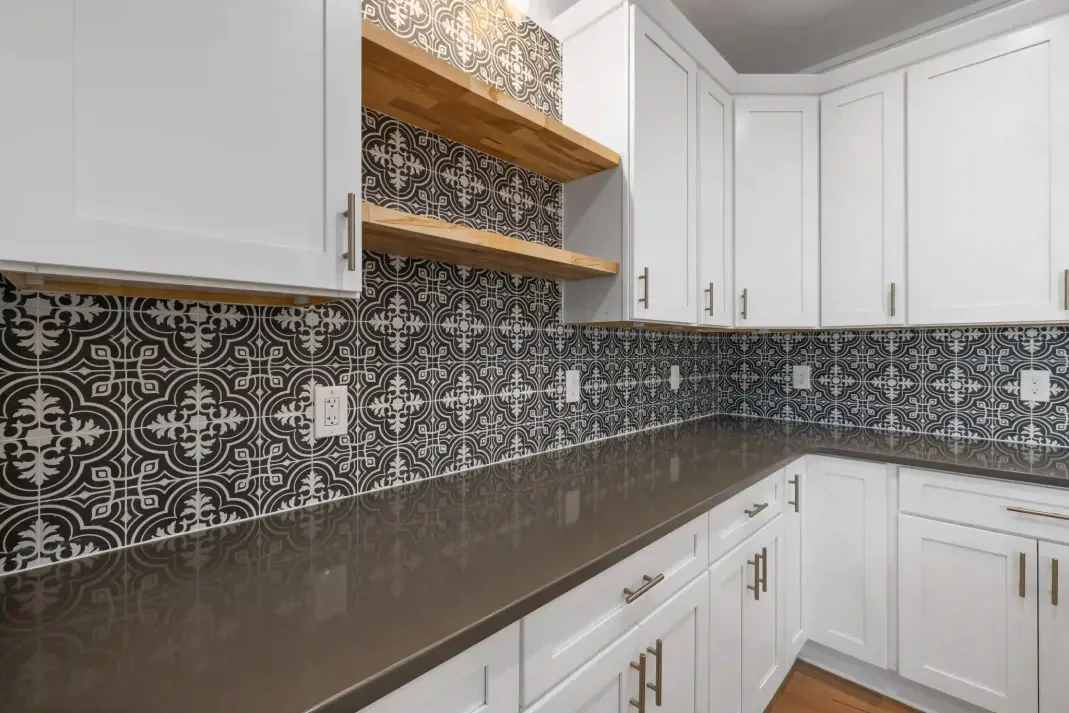
Tile for Every Room in the House
Residential tile installation covers a lot of ground. Kitchen floors and backsplashes. Entryways and hallways. Laundry rooms. Living areas with large-format porcelain. We work on all of them, and we approach each one as its own project rather than a repeat of the last job.
The materials we install include porcelain, ceramic, natural stone (marble, travertine, slate, limestone), cement and encaustic tile, and glass mosaic. Each material behaves differently under a wet saw, bonds differently to thinset, and requires a different grout joint width. We adjust our process to the material, not the other way around.
One thing most people do not know: cement and encaustic tiles must be sealed before grouting, not after. If you grout an unsealed cement tile, the pigment in the grout wicks into the tile surface and stains it permanently. We seal first, grout second, then seal again once the grout cures. That sequence matters.
How a Residential Install Goes
Estimate Visit
We come to the space, take measurements, check the substrate condition, and talk through the layout. You get a written scope before any work starts.
Substrate Prep
Demo of existing material if needed, substrate repair, backer board installation or floor leveling. This step is not optional. A flat, rigid base is what keeps tile from cracking later.
Layout Planning
We dry-lay the tile and check the pattern from every entry point before anything is bonded. We find the center, balance the cuts, and avoid leaving narrow slivers at doorways or walls.
Setting & Grouting
Tile is set in polymer-modified thinset with full back-butter coverage on each piece. After the thinset cures, we grout with the correct joint fill for the tile type and spacing. Cleanup before we leave each day.
Available in These Areas
Residential tile installation is available throughout our service area. Each neighborhood has its own housing stock and substrate quirks — we know them all.
Residential Tile FAQ
How much tile should I order for my kitchen floor?
Measure the square footage of the room and add a waste factor. For a straight grid layout, 10% overage is standard. For a diagonal or herringbone pattern, plan for 15-20% because more cuts are required. Always order all the tile you need from the same production run — dye lots can vary between batches, and matching tile ordered later may have a visible color difference.
Can large-format tiles be installed on a wood subfloor?
Yes, but the subfloor needs to meet a specific deflection standard. The industry standard for large-format tile (anything over 15 inches) is L/360, meaning the floor should flex no more than the span divided by 360 under load. We check this during the estimate visit. If the subfloor does not meet the standard, we address it before proceeding. Skipping this step is the most common reason large-format tile cracks after installation.
What is back-buttering and why does it matter?
Back-buttering means applying a thin layer of thinset to the back of the tile before pressing it into the thinset bed on the floor. It fills in any irregularities on the tile's back surface and ensures complete coverage. The industry standard requires at least 95% contact between tile and adhesive in wet areas and 80% in dry areas. Without back-buttering, you get air pockets that can cause tiles to crack under point loads or allow water to migrate behind the tile in wet areas.
Ready to Talk About Your Project?
Call us at (626) 547-4260 or send us a message. We respond within one business day.