Commercial Tile Installation
Spec-driven tile work for South Bay businesses. Lobbies, retail, restaurant kitchens, and office common areas.
Tile That Holds Up to Daily Use
Commercial tile installation is different from residential work in several practical ways. The materials need to meet higher durability and slip-resistance standards. The timelines are usually tighter. The tolerances in a spec-driven project are explicit rather than implied. We understand all of this and work accordingly.
For high-traffic floors, we specify porcelain with a PEI rating of IV or V, which indicates resistance to heavy foot traffic and abrasion. For restaurant kitchens and food service areas, we use epoxy grout instead of cement grout. Epoxy grout is non-porous, resistant to grease and commercial cleaning chemicals, and does not require sealing. It is harder to work with than cement grout, but it is the right product for that environment.
We work in occupied buildings when required, scheduling work outside business hours when the project demands it.
Commercial Applications
Large-format porcelain, stone inlays, and feature patterns in entry areas. We coordinate with general contractors and work to finish schedules.
Durable, cleanable surfaces for retail environments. We match layout to fixture plans and handle transitions at display areas and entry mats.
Epoxy-grouted tile floors and walls that meet health code requirements for non-porous, cleanable surfaces. We understand floor slope requirements for commercial kitchen drains.
Breakrooms, restrooms, and common corridors. Coordinated with general contractor schedules on tenant improvement projects.
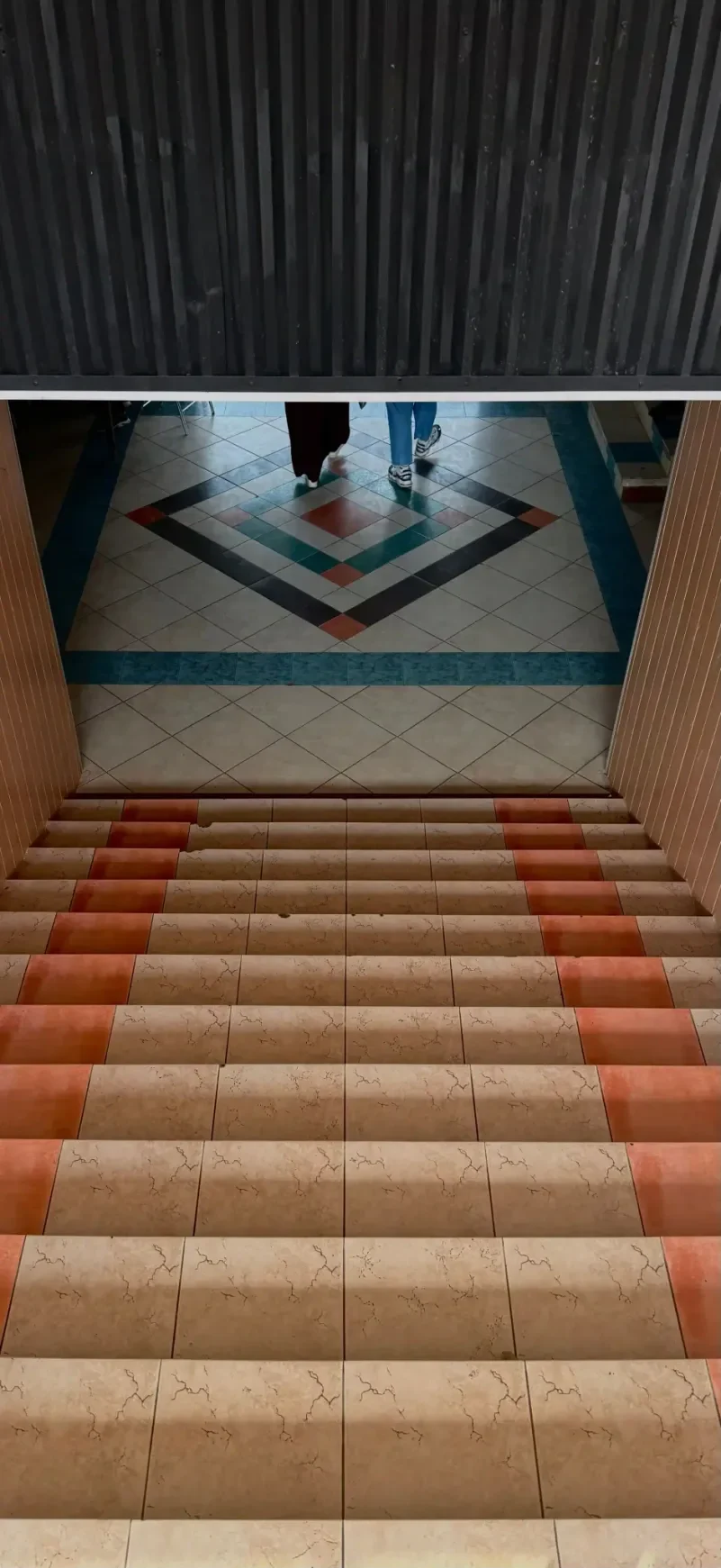
Tiled stair treads, risers, and landing surfaces with proper slip-resistance ratings. Bullnose and edge trim handled cleanly.
Commercial Tile in These Areas
We take on commercial projects throughout our South Bay service area. Harbor Gateway in particular has a mix of light commercial and industrial properties where we work regularly alongside general contractors.
Commercial Tile FAQ
What slip-resistance rating do commercial floors need?
The DCOF (Dynamic Coefficient of Friction) rating is the current standard for commercial wet areas. ANSI A137.1 requires a minimum DCOF of 0.42 for level interior wet surfaces. Restaurant kitchens and areas where water or grease is present may require higher ratings. We can source tile that meets the specification you need and can provide the product data sheet for your records.
Can you work after hours to avoid disrupting our business?
Yes. For retail and restaurant clients, evening or weekend installation is often necessary. We factor that into the project scope. Thinset and grout cure times are the same regardless of when they are applied, so the timeline is not extended by working off-hours. We just need to coordinate access and make sure the ventilation is adequate for the space during curing.
Do you work with general contractors on tenant improvement projects?
Yes. We are accustomed to working within a larger project schedule where tile is one trade among several. We coordinate with the GC on sequencing — we need the substrate ready and the space protected from other trades before we set tile, and we need to be out before finish flooring or millwork begins. We communicate directly with the GC on scheduling and any scope changes that affect our work.
Commercial Project? Let's Talk.
Call us at (626) 547-4260 or send us the project details. We respond within one business day.